
What Does Punta Cana Mean? Palm Trees, History and the Tourism Name
Published:
Updated:
Last verified:
Punta Cana is commonly explained as a coastal point associated with the cana palm: “punta” has a geographical meaning similar to “point,” while “cana” refers here to the palm. “Point of the cana palms” is a helpful English explanation, not a formal translated place name. The history also needs an important distinction: adopting Punta Cana for a tourism project is not the same as inventing the geographical name.
What does “punta” mean in Spanish?
The Royal Spanish Academy’s dictionary includes a coastal meaning: a relatively small projection of land into the sea. In this context, “point” is more useful than translating the word only as the sharp tip of an object. Place names often describe a feature of the landscape; they do not necessarily identify a modern town boundary.
What does “cana” refer to? Is it a coconut palm?
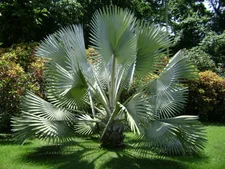
The ASALE Dictionary of Americanisms records “palma cana” as a palm name used in the Dominican Republic and Cuba. Grupo Puntacana’s historical account links its naming explanation to local fan-shaped palms. A coconut palm in a beach photograph should not automatically be identified as the particular palm behind the place name.
It is more accurate to retain “cana palm” in the explanation than to turn it into “white palm” or “coconut point.” Those familiar travel translations can blur a local plant name into a different claim. The botanical explanation and the date when people first used the place name are separate questions; one does not prove the other.
What did monseñor Jesús Castro Marte write?
In an Acento article published on August 23, 2026, Castro Marte challenged the idea that the name originated with modern tourism. He cited historian Vetilio Alfau Durán’s account of an expedition led by Cesáreo Guillermo in 1881. His argument distinguishes an earlier geographical name from Rainieri’s later adoption and popularization of it for tourism.
What can you actually read on page 67?
We checked the digitized Escritos y apuntes históricos, printed page 67, published by the Archivo General de la Nación and available through the linked mirror. Under “Expedición de Cesáreo Guillermo,” Alfau Durán describes departure from Ponce, Puerto Rico, on July 30, 1881, a landing by Punta Cana and a route through El Macao to Higüey.
This verifies the passage cited in the discussion. It is a retrospective historical account, not a contemporaneous document dated 1881. The year of the expedition must not be presented as the publication date of the source, the first recorded use of the name, or the founding date of today’s resort destination.
Was the name documented in the eighteenth century?
The specific episode cited by Castro Marte is from 1881, which belongs to the nineteenth century. It does not establish eighteenth-century use. An eighteenth-century claim would require a separately identified source from the 1700s, with enough provenance to determine which coastal location it describes. We have not verified such a document for this article.
What was Frank Rainieri’s role, and where does Punta Borrachón fit?
The resort’s own history says Rainieri created the tourism brand in the early 1970s for land known as Punta Borrachón. Grupo Puntacana also dates the opening of Punta Cana Club to 1971. These are milestones in the company’s development and use of the name.
Castro Marte interprets the change as reusing an existing geographical name for the specific tourism development. That reading challenges the broader implication that the words themselves were newly invented. The company narrative and the historical argument therefore should be identified by source, rather than collapsed into an unqualified statement that Rainieri first named the entire area.
Can we name the person who first coined Punta Cana?
Not from the sources reviewed here. A dictionary can explain words; a company can describe its branding decision; a historian can recount an earlier event using a place name. None of those facts, on its own, identifies the first speaker who coined the name. A responsible history leaves that question open instead of inventing an origin story.
Is Punta Cana a country, an island, a city or a resort?
Punta Cana is a destination in the eastern Dominican Republic, not a separate country or island. The tourism ministry’s destination guide covers a wider visitor area including beaches such as Bávaro and Macao. “Punta Cana” in a holiday description can therefore have a broader scope than one resort or settlement.
The spelling “Puntacana” also appears in company and resort branding. Do not assume that a hotel advertised as being in Punta Cana is part of Puntacana Resort & Club. Likewise, Bávaro and Cap Cana should not be used as interchangeable property addresses. See our Cap Cana and Punta Cana comparison and practical destination guide when choosing where to stay.
Why does the distinction matter when planning a visit?
A historical coastal place name does not provide a modern pickup address. Use your hotel’s full name, map location and confirmed entrance for airport transfers and excursions. If local history interests you, ask what a cultural excursion actually visits and how much time is allocated to interpretation, rather than choosing it only because “Punta Cana” appears in the title.
Sources / Official Sources
Services for your trip
- Explore Punta Cana excursions
Compare activities for your trip.